
English| EUR
Suggested for you
More currencies
Choose a language
Barcelona ranks among Europe's most pedestrian-friendly cities, with compact historic quarters, broad boulevards, and a seafront promenade that stretches for miles. Most visitors cover the core sights without ever boarding a bus. This guide breaks down which districts reward walking, where terrain becomes a factor, and when to start your route to avoid midday crowds.
Quick answer
Yes, Barcelona is highly walkable. The Gothic Quarter, El Born, and the Eixample grid lie within a comfortable 30-minute walk of each other, and most major landmarks—from the cathedral to the Rambla—are concentrated in a two-kilometer radius. Sidewalks are wide, pedestrian zones are plentiful, and the city operates continuously, so you can explore any hour. The best arrival window is 08:00–10:00 to avoid mid-day heat and peak pedestrian congestion in popular tourist areas.
Barcelona was rebuilt in the nineteenth century on a human scale. Ildefons Cerdà's Eixample grid, laid out in 1859, assigned wide sidewalks and chamfered corners to every block, creating sightlines that still make navigation intuitive today. The result is a city where walking feels natural rather than forced. The Gothic Quarter and El Born form the medieval core. Streets here are narrow, shaded, and closed to cars. You can walk from Plaça de Catalunya to the waterfront in fifteen minutes, passing the cathedral, Roman walls, and the Picasso Museum without backtracking. The Eixample district, by contrast, unfolds in long straight avenues. Passeig de Gràcia runs two kilometers from the old town to the Gràcia neighborhood, lined with Modernista façades and shaded by plane trees. The walk is flat, the blocks are predictable, and you pass Casa Batlló, La Pedrera, and dozens of smaller landmarks without consulting a map. Terrain becomes a consideration only at the city's edges. Montjuïc rises 173 meters above the port, and while the approach is gradual, the climb to the castle or the Olympic ring requires stamina. Tibidabo, the mountain that closes the northern horizon, is steeper still and better reached by funicular. Within the flat central grid, however, inclines are negligible. The seafront promenade extends from Barceloneta to Diagonal Mar, a four-kilometer stretch with no elevation change and uninterrupted pavement. Barcelona's streets are accessible around the clock, but timing shapes the experience. Early morning brings cooler air, fewer pedestrians, and open views of the Sagrada Família or the Arc de Triomf without the scrum. By noon, the Rambla and Plaça Reial fill with groups, and the sun reflects hard off the Eixample's stone façades. Late afternoon, after 17:00, the city shifts: cafés set tables on the sidewalks, the light softens, and walking becomes a social activity rather than a logistical one. Public streets require no entrance fee, and the urban fabric rewards spontaneous detours—an open courtyard, a ceramic-tiled shopfront, a pocket square where neighbors gather—none of which appear on a bus route.
“Cerdà's Eixample grid assigned wide sidewalks and chamfered corners to every block, creating sightlines that still make navigation intuitive today.”
Barcelona's compact layout and pedestrian-friendly design make it one of Europe's most walkable cities. Most visitors cover the main districts on foot, with the Gothic Quarter and Eixample forming the core walking circuit.
Begin near Plaça de Catalunya and work your way into the narrow medieval lanes of Barri Gòtic. Streets here follow no grid, so download an offline map or keep your phone charged—tourists regularly loop back to the same square without realizing it.
Once you reach Passeig de Gràcia, you'll enter Eixample's chamfered-corner grid, where blocks form a predictable pattern. Navigation becomes straightforward, though distances feel deceptive—each block is longer than it appears, and the boulevard stretches over two kilometers.
La Rambla runs straight from Plaça de Catalunya to the waterfront, splitting the Gothic Quarter from El Raval. Stick to the tree-lined pedestrian center rather than the vehicle lanes, and keep bags secure in the dense foot traffic.
Barceloneta's beachfront promenade extends three kilometers from Port Vell to the Forum, completely flat and paved. Locals jog and cycle here year-round; tourists often underestimate the distance and end up taking the metro back from Poblenou.
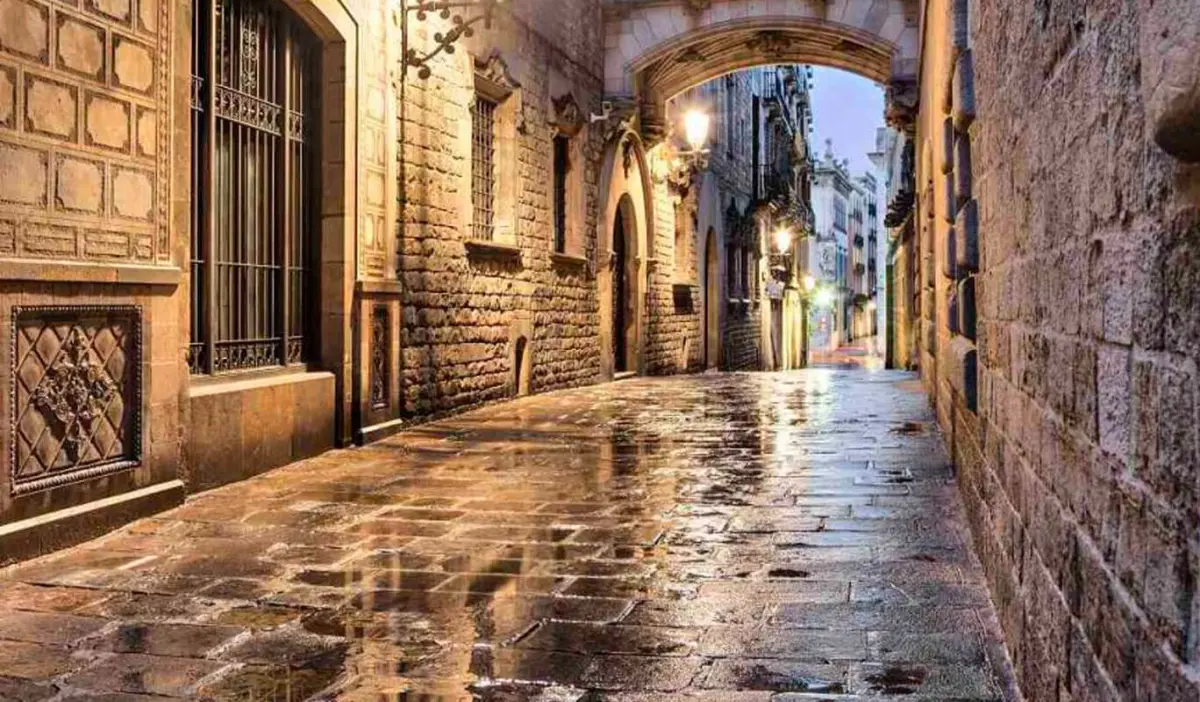
Cobblestones in the Gothic Quarter and El Born are uneven and offer no cushioning. Many visitors bring only sandals or fashion sneakers, then develop blisters or ankle fatigue by day two.
The best arrival window for navigating Barcelona on foot is 08:00–10:00. This timing allows you to avoid mid-day heat and peak pedestrian congestion in popular tourist areas.
—
Early starts provide the most comfortable walking conditions before congestion increases.
Mild temperatures, 15°C to 23°C
The climate is well-suited for extended city walks.
Hot and humid, 24°C to 30°C
Mid-day heat is significant, making early morning the preferred time for mobility.
Cool and pleasant, 14°C to 22°C
Clear weather supports consistent daily walking routes.
Verdict: The best slot for walking is between 08:00–10:00 during the months of April, May, October, or November.
Barcelona provides extensive accessibility for pedestrians, though historic districts feature varying pavement conditions. Major thoroughfares are generally well-maintained and designed to accommodate all visitors.
Most sidewalks in the city center are equipped with dropped curbs for navigation.
Historic areas like the Gothic Quarter contain cobblestones that may present challenges for some travelers.
Public infrastructure, including metro stations and pedestrian bridges, prioritizes lift access for mobility support.
Public facilities are available in major tourist zones and can be identified via the official site at https://www.barcelona.cat.
Many crossings feature audio signals, and support services can be coordinated by calling +34932853834.
Pack smart to make the most of Barcelona's pedestrian-friendly streets and varied terrain.
Everything you need to know about is barcelona walkable
Yes, Barcelona is highly pedestrian-friendly, with many historic districts featuring narrow streets that are best experienced at a slow pace. Whether is barcelona walkable often depends on your itinerary, but the central grid makes navigation straightforward for most visitors.
Many of the most famous Barcelona landmarks are clustered within walking distance, allowing travelers to see diverse architecture without constant transport. Exploring these city landmarks on foot provides a deeper connection to the local atmosphere and hidden plazas.
To get the most out of your experience, consider a guided Barcelona walking tour to uncover history that is easily missed alone. These tours often navigate the city center efficiently, ensuring you cover significant sights while learning about local heritage.
The Gothic Quarter is dense and maze-like, making it a perfect area where the question is barcelona walkable is answered by its centuries-old design. These streets were built before automobiles, so they remain some of the most comfortable spaces for pedestrians in the city.
Accessing the city's public thoroughfares is free, meaning the cost for pedestrian exploration is 0 EUR. Since it is a public city, no entrance fee is required to enjoy the streets, plazas, and historic alleys.
While the city is generally accessible, the historic centers feature cobblestones that can be challenging for strollers. If you wonder is barcelona walkable with kids, plan your route to utilize the flatter, wider avenues found in the Eixample district.
To avoid peak heat and congestion, plan your excursions during the best arrival window of 08:00–10:00. This early start ensures you can navigate popular zones before they become crowded with midday visitors.