Barcelona Walking Tours
Tours & tickets

Hand-picked by our editors — only the best 5 modernisme experiences from 47 reviewed.

Open today 09:30 – 18:30
Attendance: Moderate — summer season
Please note that outdoor walking paths may experience higher temperatures in the afternoon.
Free cancellation Instant confirmation Mobile voucher Skip-the-line Verified partner
Tickets

Choose your ticket

Verified partners for every tour, free cancellation where available, and instant confirmation on every booking.

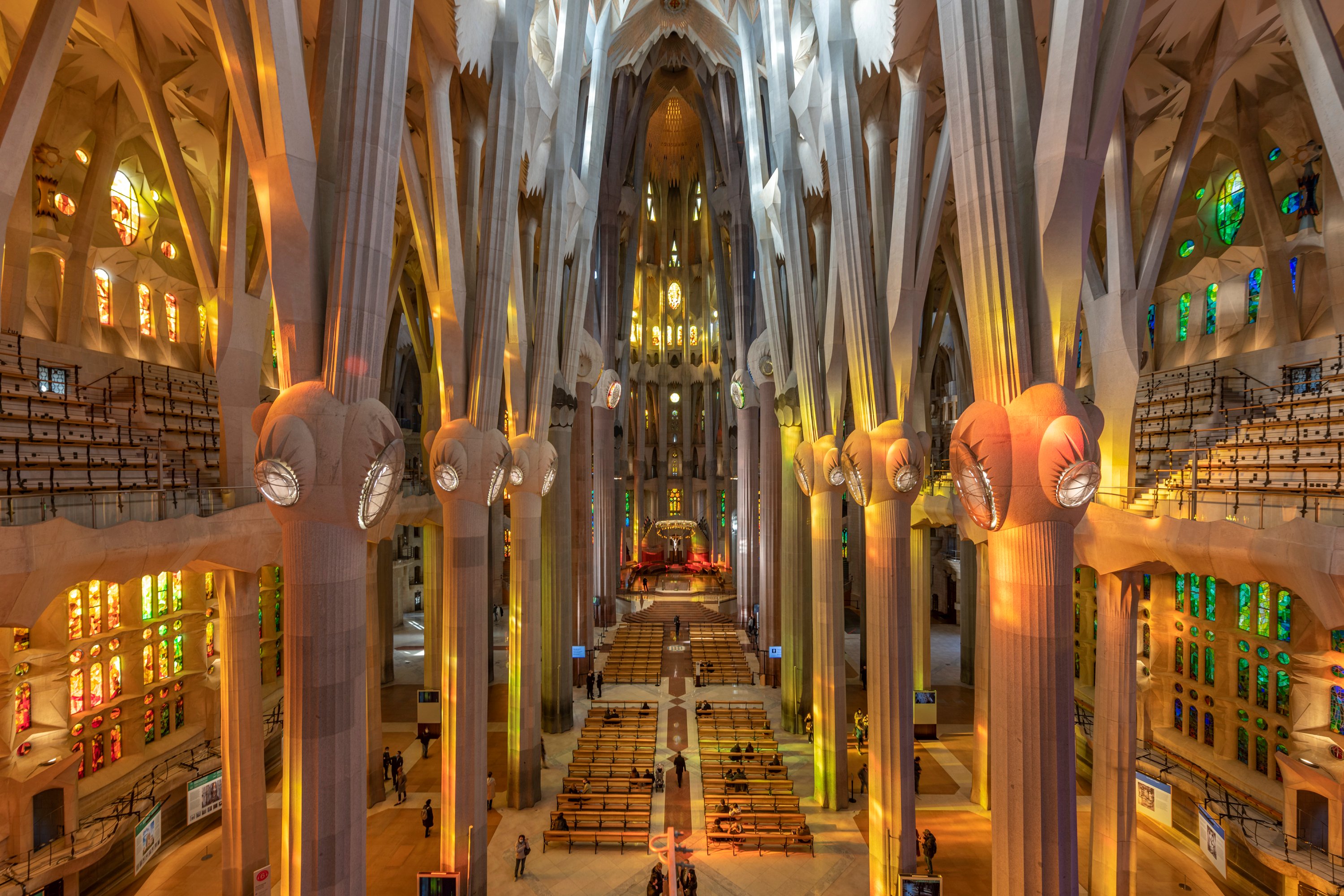
Sagrada Família Audio-Guided Entry
Standard Entry

Sagrada Família Audio-Guided Entry

★ 4.6 (117658)
$39
per person
Instant Mobile voucher Flexible — change up to 24h

Step inside Gaudí's iconic unfinished basilica and explore its breathtaking Gothic-meets-Art Nouveau design at your leisure.

Reserve
Sagrada Familia Guided Tour with Priority Access 2 hr
Guided Experience

Sagrada Familia Guided Tour with Priority Access

★ 4.4 (6655)
$64
per person
Instant Mobile voucher Flexible — change up to 24h

Skip the queue and explore Gaudí's unfinished masterpiece with an expert guide and headset commentary

Reserve

Prices from verified partners. Availability updates in real time at checkout. Free cancellation policies apply where shown.

What you'll do

Inside a tour, step by step

  1. 01 15 min

    Entrance Reception

    Registration and audio guide collection

Highlights

What you'll see inside the attraction

The landmarks, rooms, and views travelers on this tour remember — all visible on a single visit.

Administration Pavilion

This central structure features elaborate stained glass and intricate ceiling mosaics totaling over 10,000 pieces.

Sant Rafael Pavilion

This space was designed to maximize patient light and air, showcasing 20th-century health concepts.

Garden Courtyards

These areas were essential for the therapeutic environment of the original hospital site.

St. Leopold Pavilion

Known for its unique roof lines and terracotta detailing, this pavilion is a masterpiece of design.

Administrative Hall

This area displays original woodwork and decorative ceramic tiles unique to Catalan Modernisme.

Head to head

Barcelona Walking Tours Modernisme: Sant Pau Recinte Modernista vs Palau de la Música Catalana

These two masterpieces by Lluís Domènech i Montaner complement each other perfectly; visitors who prioritize open-air exploration prefer Sant Pau, while those seeking an intimate concert hall atmosphere favor the Palau.

Feature Top pick Sant Pau Recinte Palau de la Música
Architectural focus
Concert hall auditorium
Location in city
El Born district
Tour style
Guided group access
Visitor capacity
Limited/timed entry
Outdoor space access
Street-level facade view
Key design element
Stained glass skylight

Verdict: Choose Sant Pau if you prefer the flexibility of Barcelona walking tours modernisme, or select the Palau for a concentrated, immersive look at interior ornate craftsmanship.

How your ticket works

Book your ticket in 3 steps

  1. 01

    Book online

    Choose your ticket, select your date, and reserve in under two minutes. Secure checkout handled by our verified partner.

  2. 02

    Receive your mobile voucher

    Instant confirmation by email, with a mobile voucher you can save offline. No printing, no queuing at a collection desk.

  3. 03

    Show & enter

    Arrive at the entrance, show your voucher on your phone, and walk in. Most tickets include priority or skip-the-line access.

Plan your visit

Everything you need to know before you go

Practical details for your visit straight from our verified partners — hours, access, rules, and how to get there.

Open today · 09:30 – 18:30
Opening Hours
09:30–18:30 (Sun until 14:30)
Address
Carrer de Sant Antoni Maria Claret, 167, 08025 Barcelona, Spain
Site Access
Fully accessible pathways throughout the garden and pavilions
Best Arrival
09:30–11:00 to avoid mid-day tour group crowds
Storage
No large locker facilities available on-site
Navigation
Follow the designated paths through the Recinte Modernista de Sant Pau
Mon
09:30 – 18:30
Tue
09:30 – 18:30
Wed
09:30 – 18:30
Thu
09:30 – 18:30
Fri
09:30 – 18:30
Sat
09:30 – 18:30
Sun
09:30 – 14:30
Closed on: Dec 25 (Christmas Day), Dec 26 (Saint Stephen's Day), Jan 1 (New Year's Day), Jan 6 (Epiphany)
Main entrance

Main Entrance

Carrer de Sant Antoni Maria Claret, 167

Arrive at the main gate 10 minutes prior to your selected slot

Address
Carrer de Sant Antoni Maria Claret, 167, 08025 Barcelona, Spain
Storage
No large locker facilities available on-site
Navigation
Follow the designated paths through the Recinte Modernista de Sant Pau

How to get there

🚆
Public transport · 15 min transit · Affordable city fare

Take Metro Line 5 to Sant Pau/Dos de Maig station.

🚕
Taxi · 20 min ride · Varies by distance

Request drop-off at the main entrance on Carrer de Sant Antoni Maria Claret.

Dress code

Casual attire is appropriate for exploring the Recinte Modernista de Sant Pau. Wear comfortable walking shoes as the site covers a large area with paved surfaces.

Bags & security

Small bags are permitted. Security reserves the right to inspect personal items upon entry to the historic complex.

Photography

Personal photography is encouraged throughout the site for non-commercial purposes. Professional filming requires prior authorization from the administration.

Accessibility

The entire complex is equipped with ramps and elevators to accommodate visitors with reduced mobility. Wheelchairs are available upon request at the reception desk.

Mobile phones

Mobile phones are permitted for use during your visit. We suggest silencing devices to respect the peaceful atmosphere of the historic pavilions.

What to bring

  • Water bottle
  • Sun hat
  • Comfortable footwear
  • Camera
  • Light jacket for interiors

Not allowed

  • Tripods
  • Drones
  • Professional lighting equipment
  • Large suitcases
  • Pets
  • Alcoholic beverages
  • Sharp objects
  • Food for picnicking

Families & strollers

The site is suitable for children, with plenty of open space in the gardens. Strollers are allowed inside the exhibition pavilions.

Food & drink

A cafe is located on the premises for light refreshments. Consumption of food and drinks is restricted to designated areas.

Pets

Pets are not allowed inside the Recinte Modernista de Sant Pau, with the exception of certified service animals.

Good to know

The site is an active architectural landmark. Visitors are asked to refrain from touching the original ceramic surfaces and stained glass.

Meeting point

Where to find us

Main Entrance

Carrer de Sant Antoni Maria Claret, 167

Arrive at the main gate 10 minutes prior to your selected slot

Get directions
Around your visit

Everything else worth knowing

Best time to go, insider tips, nearby landmarks, and the cancellation fine print — flip through to skim what matters to you.

Best time to visit

How crowds, weather, and events shift across the year.

Spring

Mild temperatures make walking between the pavilions comfortable and pleasant.

Summer

Visit early in the morning to avoid high heat and peak crowd volume.

Autumn

Lower visitor numbers offer a quiet experience for observing intricate facades.

Winter

Cooler weather allows for extended time admiring the indoor architectural details.

Helpful tips for your visit

Small details that turn a good visit into a great one.

Ticket Booking

Purchase your 18 EUR general admission online to save time at the gate.

Guided Content

Check the official site for audio guide availability to enhance your architectural understanding.

Peak Crowds

If you miss the morning window, late afternoon visits often provide a quieter atmosphere.

Navigation

Pick up a site map at the entrance to ensure you do not miss any of the distinct pavilions.

Combined Visits

Plan to visit nearby architectural sites after exploring this complex to maximize your day.

Nearby landmarks

Non-bookable sights within a short walk — free to visit, easy to pair.

Sagrada Familia

12 min walk

Iconic basilica featuring world-famous Modernisme architecture.

Cancellation policy

Flexible, no hidden fees.

Tickets are non-refundable once purchased. Changes to the visit date are permitted up to 48 hours in advance.

Where to stay

Hotels & districts near the attraction

Hand-picked options within walking distance — pick a district for vibe, or a specific hotel for convenience.

Hotel Sant Pau

5 min walk
mid-range

Convenient location with views of the historic hospital complex.

About

The place, in context

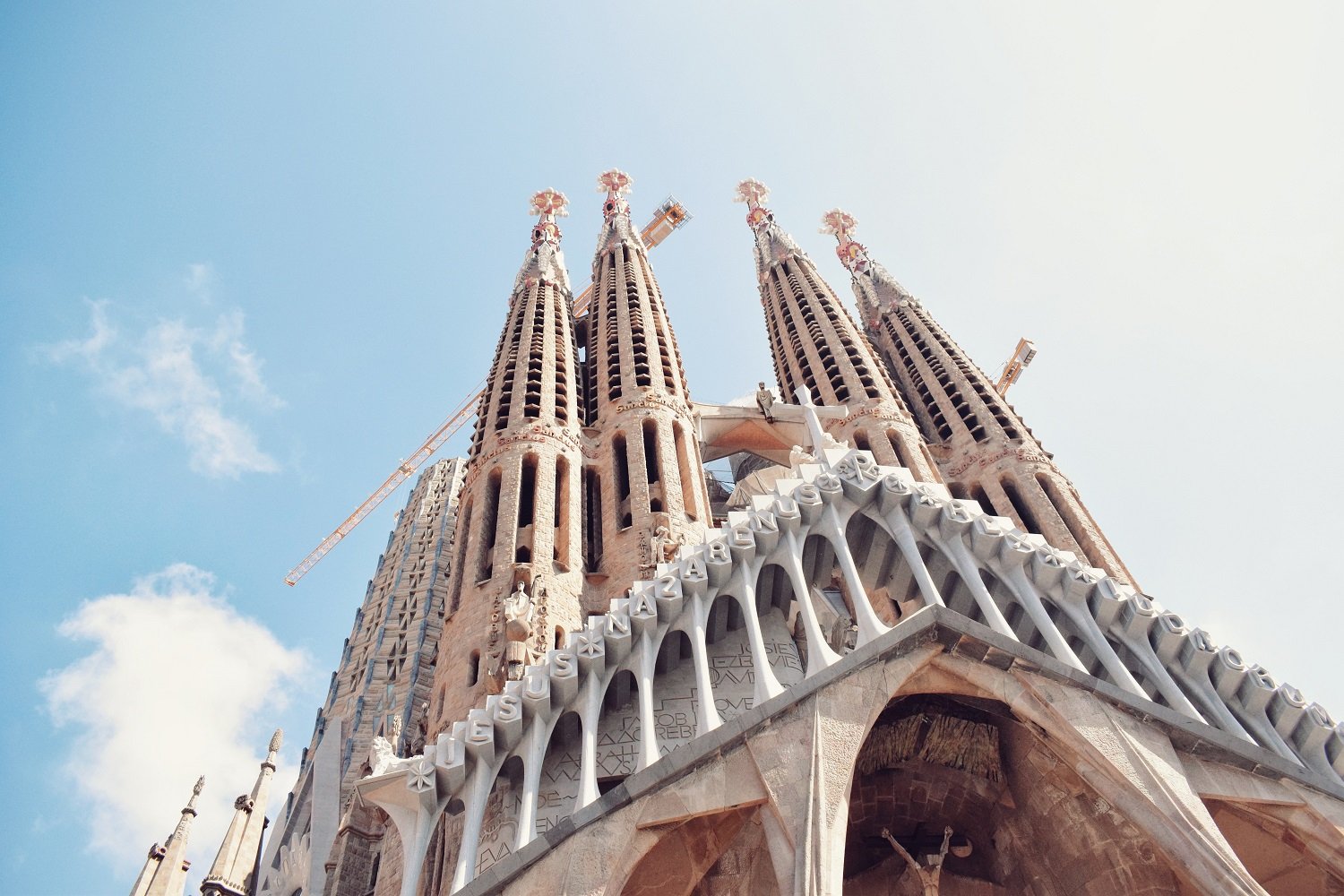
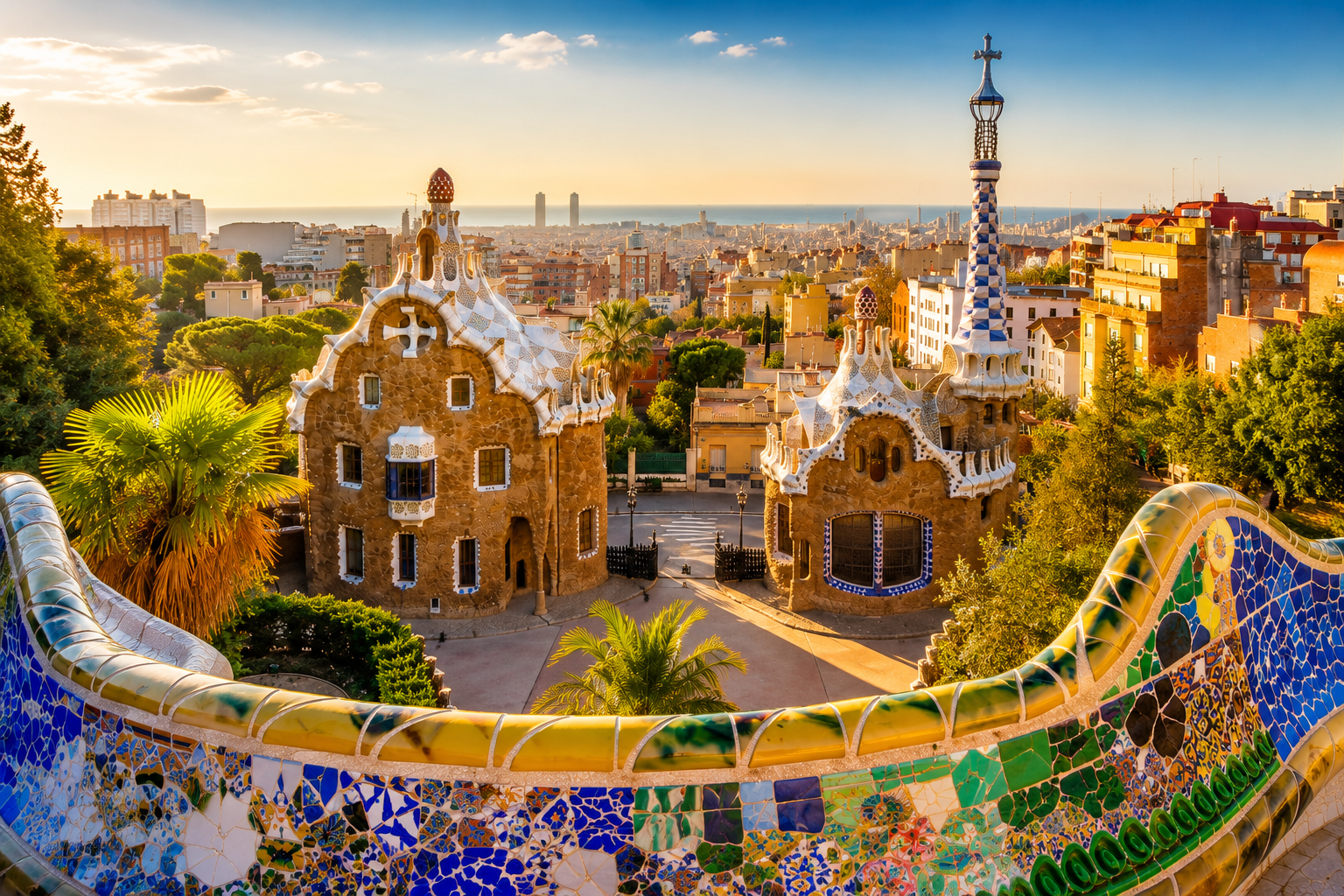
Between 1888 and 1926, Barcelona's Eixample district became Europe's largest laboratory for organic architecture. Antoni Gaudí, Lluís Domènech i Montaner, and Josep Puig i Cadafalch transformed 550 city blocks with wrought-iron balconies, trencadís mosaics, and parabolic arches—an urban fabric so cohesive that UNESCO inscribed nine buildings as a collective World Heritage site in 1984 and 2005. The movement called Modernisme diverged sharply from its Art Nouveau contemporaries in Paris and Brussels: where Victor Horta favored sinuous line, Catalan architects insisted on structural honesty, exposing iron columns and ceramic vaulting systems that doubled as ornament. Today, barcelona walking tours modernisme link four key clusters. The Sagrada Família anchors the northeast quadrant; Gaudí's unfinished basilica rises 172 meters, its Nativity Facade carved between 1894 and 1930 with 400 botanical and zoological specimens cast directly from Mediterranean flora. Three kilometers southwest, Park Güell's hypostyle hall shelters 86 Doric columns, their capitals embedded with recycled ceramic shards—a technique Gaudí refined after visiting the kilns of Joan Baptista Grau in 1900. Domènech's Palau de la Música Catalana, completed in 1908, inverts the spatial hierarchy: its 2,146-seat concert hall is wrapped in stained glass rather than masonry, the inverted dome fitted with 40 ceramic muses modeled by Eusebi Arnau. Four blocks north, the Sant Pau Art Nouveau Complex spreads across nine hectares—Domènech's 1930 hospital campus, now a UNESCO site, where 27 pavilions connect via underground tunnels lined with Valencian tile. The architectural innovation visible in these works reflected Catalonia's industrial wealth. By 1900, Barcelona's textile mills generated 40 percent of Spain's exports, and newly affluent families commissioned private homes as vertical manifestos. Casa Batlló's facade, renovated by Gaudí in 1906, uses bone-shaped balconies and a roof modeled on Saint George's dragon—an allegory legible to anyone who walked Passeig de Gràcia. Puig i Cadafalch's Casa Amatller, completed four years earlier, layers Gothic Revival stepped gables over a steel frame, proving that Modernisme architects debated historical reference as vigorously as they experimented with reinforced concrete. The tension between craft tradition and industrial material defines every surface: hand-painted tiles meet cast-iron beams; stained-glass panels fit into prefabricated metal mullions. Walking these routes today means reading a city that built its identity one facade at a time.

"Between 1888 and 1926, Barcelona's Eixample district became Europe's largest laboratory for organic architecture."
Your experience

What a tour day looks like

A step-by-step walkthrough of the visit — what you'll see, how long each stage takes, and the details that matter.

You start at the Sagrada Família's eastern entrance, where the Nativity Facade's sculptural groups rise in three tiers—Hope, Charity, Faith—each column crowned with botanical capitals Gaudí cast from live palms and olive branches. Audio guides sync to QR codes at each pillar; you crane upward as the narrator explains the hyperboloid geometry of the nave's branching columns, completed in 2010. Twenty minutes later, you board the metro at Sagrada Família station, Line 5 southwest to Diagonal, then transfer to Line 3 toward Vallcarca. Park Güell's entrance lies 200 meters uphill from the station. You pass through the gingerbread porter's lodge—its roof a white trencadís dome—and climb the double staircase past the mosaic dragon, its scales assembled from kiln seconds. The hypostyle terrace opens onto the serpentine bench, 110 meters of continuous seating where Josep Maria Jujol embedded plate fragments, bottle glass, and doll heads into the grout. From here, the city spreads below: the twin towers of the Sagrada Família, the Mediterranean horizon, the grid of Cerdà's 1859 urban plan. Descending toward Passeig de Gràcia, you walk the four-block corridor from Casa Batlló to Casa Milà, their undulating stone facades scored with balconies shaped like theater masks and writhing kelp. Each doorway frames a different ceiling—vaulted, coffered, painted with florals—and you register the density: seven major Modernisme works in 600 meters, a concentration unmatched anywhere in Europe.

Frequently asked

Frequently asked questions about barcelona walking tours modernisme tickets

What are the opening hours for these barcelona walking tours modernisme tours?

The Recinte Modernista de Sant Pau is open from 09:30 to 18:30 daily, except Sundays when it closes at 14:30.

Is there an entrance fee for the Recinte Modernista de Sant Pau?

Yes, the general adult admission fee for a self-guided visit is 18 EUR.

How early should I arrive for my barcelona walking tours modernisme tour?

We recommend arriving between 09:30–11:00 to avoid mid-day tour group crowds.

Are bags allowed inside?

Yes, small bags are permitted, but there are no large locker facilities available on-site.

Is the site accessible for wheelchair users?

Yes, the entire complex is fully accessible with ramps and elevators.

Can I take photographs during my visit?

Personal photography is welcome, provided it is not for commercial purposes.

Are there food options at the site?

Yes, there is a cafe on-site for light refreshments.

How do I reach the site?

You can reach the site via Metro Line 5 to the Sant Pau/Dos de Maig station.

Is the site open on Sundays?

Yes, the site is open on Sundays from 09:30–14:30.