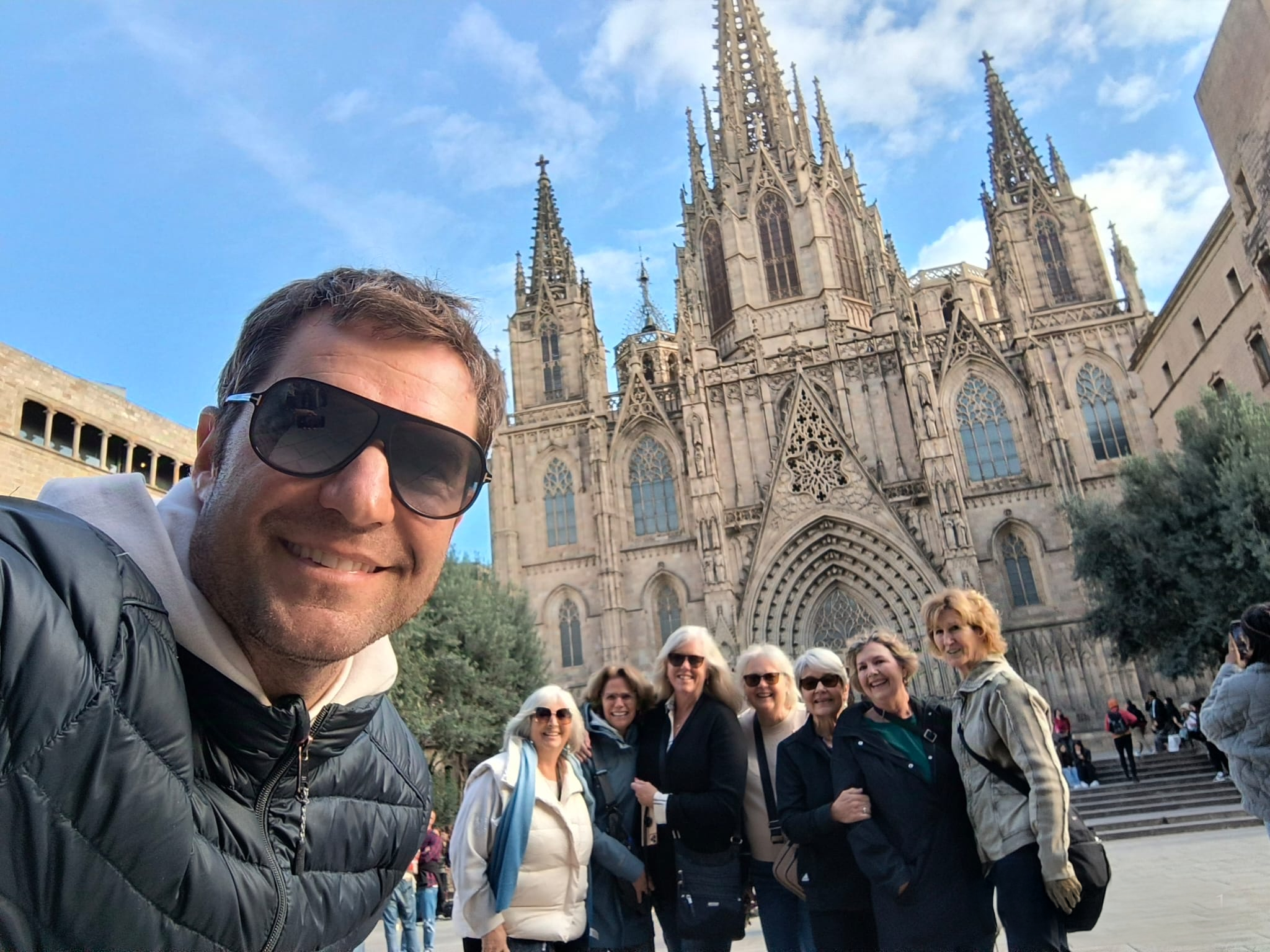
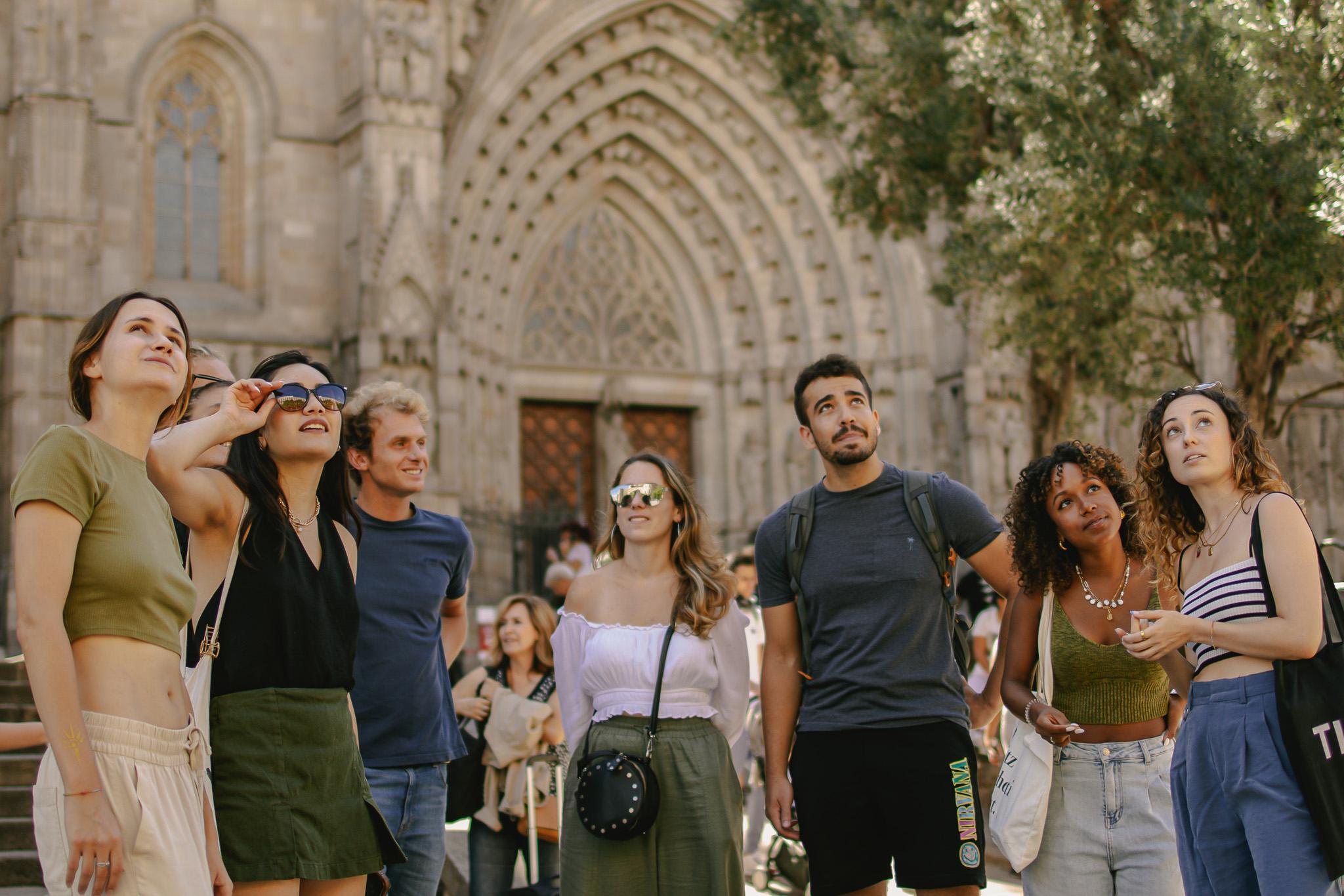
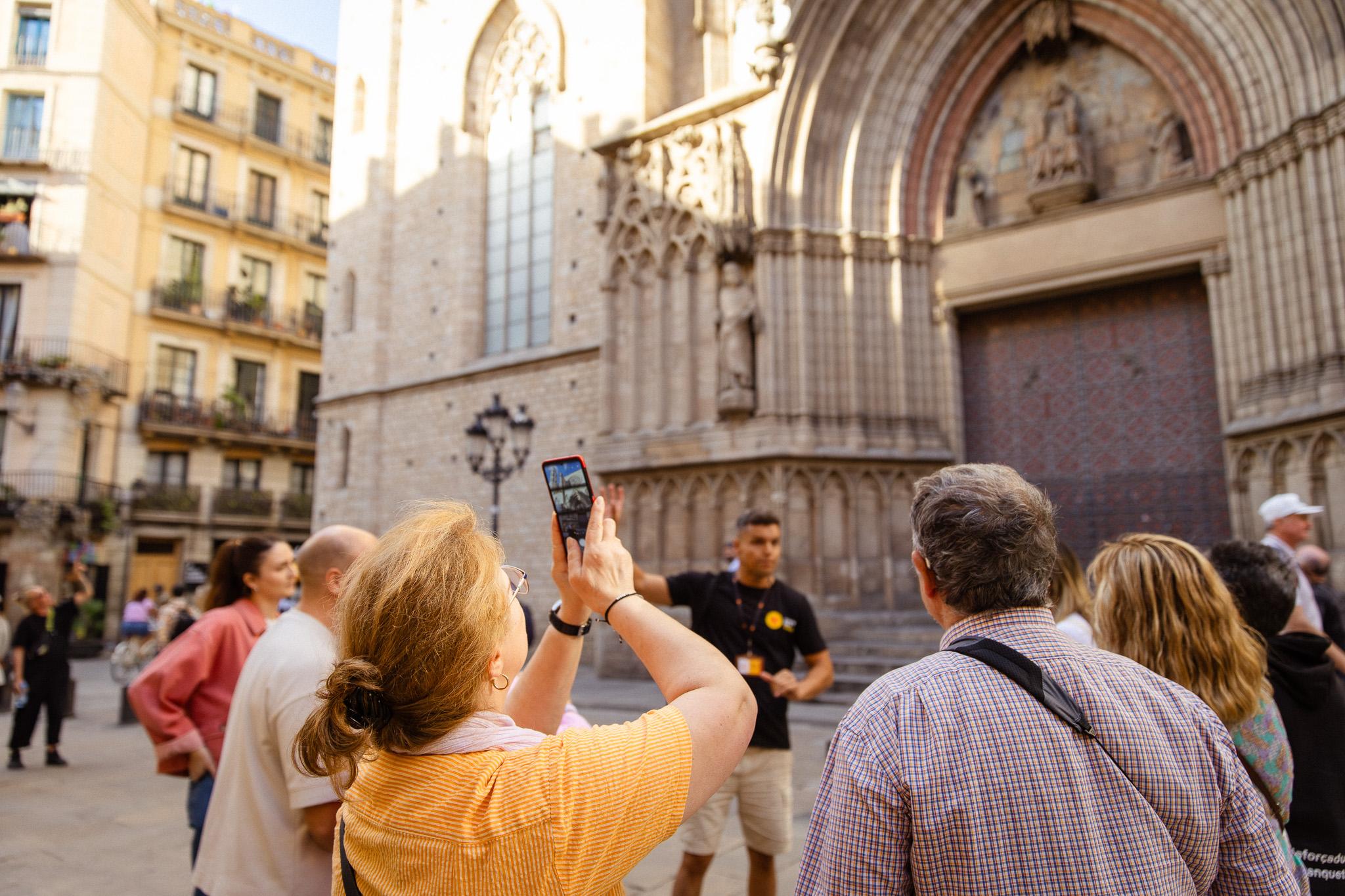
4 hr
Old Town & Gothic Quarter Walking Tour
Uncover Barcelona's Roman roots and medieval splendor on a guided stroll through ancient lanes
Reserve
Hand-picked by our editors — only the best 5 experiences from 47 reviewed.
Verified partners for every tour, free cancellation where available, and instant confirmation on every booking.
4 hr
Uncover Barcelona's Roman roots and medieval splendor on a guided stroll through ancient lanes
Reserve
2 hr
Explore medieval Barcelona's hidden corners and Roman roots with a local storyteller guide
Reserve
2 hr
Explore 2,000 years of history through Gothic Quarter streets with an expert resident guide
ReservePrices from verified partners. Availability updates in real time at checkout. Free cancellation policies apply where shown.
The landmarks, rooms, and views travelers on this tour remember — all visible on a single visit.
14th-century Gothic church with a famous cloister containing 13 white geese.
Professional guides provide superior historical context, whereas self-guided visits offer total independence; most visitors who do both find the organized barcelona walking tours gòtic provide a more immersive understanding of the medieval city center.
| Feature | Top pick Guided Tour | Self-Guided |
|---|---|---|
Narrative depth |
Expert storytelling and historical facts | Dependent on personal research |
Navigation ease |
Lead by professional guide | Requires map or digital app |
Flexibility |
Fixed departure times | Explore at own pace |
Cost |
20–45 EUR (summer) | 0 EUR (Free entry to the neighborhood) |
Social interaction |
Group engagement with guide | Private experience with companions |
| See tickets → |
Verdict: Choose the barcelona walking tours gòtic tour for deep learning, or pick a self-guided route if you prefer quiet freedom while browsing these local landmarks with barcelona walking tours gòtic tickets in hand.
Choose your ticket, select your date, and reserve in under two minutes. Secure checkout handled by our verified partner.
Instant confirmation by email, with a mobile voucher you can save offline. No printing, no queuing at a collection desk.
Arrive at the entrance, show your voucher on your phone, and walk in. Most tickets include priority or skip-the-line access.
Practical details for your visit straight from our verified partners — hours, access, rules, and how to get there.
Casual attire is appropriate, though modest dress is required for visiting the Barcelona Cathedral.
Keep belongings in front of you at all times as these busy streets can attract pickpockets.
Barcelona walking tours gòtic are perfect for photography; early morning light is ideal for medieval facades.
Many narrow streets and ancient stone paths make accessibility challenging for wheelchairs in certain sections.
The area is car-free and pedestrian-friendly, making it suitable for family walks and exploring hidden squares.
Numerous tapas bars and cafes serve local Catalan cuisine throughout the district.
Best time to go, insider tips, nearby landmarks, and the cancellation fine print — flip through to skim what matters to you.
Flexible, no hidden fees.
Individual attractions within the district have separate policies. Entrance to the neighborhood itself is free of charge.
The Gothic Quarter sits atop four distinct civilizations, each layer visible in the stonework. Roman columns support medieval arches; fourteenth-century facades conceal Visigothic foundations; plaças paved in 1823 rest on first-century forum floors. The neighborhood earned its name not from the Middle Ages but from the nineteenth-century Renaixença, when Catalan architects rediscovered the district's concentration of Catalan Gothic buildings and began systematic restoration. Barcelona walking tours gòtic reveal a district that was never planned as a coherent whole. The Roman colony of Barcino occupied fifteen hectares behind six-meter walls, portions of which still stand along Carrer del Call and beneath Plaça del Rei. The medieval city expanded in concentric rings, each century adding chapels, guildhalls, and aristocratic palaces without erasing what came before. By 1400, Barcelona was the capital of a Mediterranean empire stretching to Athens, and the Gothic Quarter—then simply the city center—housed the Consell de Cent, the representative assembly that governed Catalonia for five centuries. The Saló del Tinell, a vast fourteenth-century hall with stone arches spanning seventeen meters without intermediate support, served as the throne room where Ferdinand and Isabella received Columbus in 1493. Today the Barri Gòtic remains Barcelona's administrative and ceremonial heart. The Generalitat de Catalunya, Catalonia's government, occupies a fifteenth-century palace on Carrer del Bisbe. The Cathedral of the Holy Cross and Saint Eulalia, begun in 1298 and completed in 1420, anchors the district's northern edge; its cloister shelters thirteen white geese, one for each year of the child martyr Eulalia's life. Carrer del Bisbe, the Gothic Quarter's most photographed street, displays a neo-Gothic bridge added in 1928—a replica of Venice's Bridge of Sighs, built for the International Exposition. The district's two thousand years are compressed into sixty-eight hectares. Plaça Sant Jaume, the Roman forum, now separates the Palau de la Generalitat from the Casa de la Ciutat, Barcelona's city hall. The Jewish Quarter, El Call, occupies the blocks southwest of the cathedral; Hebrew inscriptions remain embedded in Carrer de Sant Domènec del Call. Carrer Montcada, the medieval road to the port, became the address of merchant palaces in the thirteenth century. Gothic Quarter barcelona tour itineraries cross these layers in two hours, but the district rewards slower observation—the Roman aqueduct under Plaça Nova, the fifteenth-century hospital on Carrer de l'Hospital, the medieval fountain in Plaça Sant Felip Neri, untouched since the Spanish Civil War.

"The Gothic Quarter sits atop four distinct civilizations, each layer visible in the stonework."
A step-by-step walkthrough of the visit — what you'll see, how long each stage takes, and the details that matter.
You enter the Barri Gòtic through Plaça Nova, where two Roman towers flank the medieval gate. Your guide gestures to the aqueduct embedded in the wall six meters overhead, its function unchanged for nineteen centuries. You turn into Carrer del Bisbe and pause beneath the neo-Gothic bridge; morning light filters through its tracery, casting geometric shadows on the cobblestones. The route narrows into Carrer de Sant Felip Neri, a quiet plaça ringed by baroque facades. Shrapnel scars from a 1938 bombing pockmark the church wall; your guide explains the history in two sentences, then moves on. You descend into the Jewish Quarter, where street widths shrink to two meters. Hebrew inscriptions mark doorways; the medieval synagogue, rediscovered in 1996, lies three meters below current street level. You emerge at Plaça Sant Jaume, the Roman forum and modern political center. The Palau de la Generalitat occupies the square's north side; the Casa de la Ciutat faces it from the south. Your guide points out the fifteenth-century gargoyles, the Catalan flag, the balcony where independence declarations have been read. You walk east toward the cathedral, passing through Carrer del Paradís, where four Roman columns stand inside a medieval courtyard. The barcelona walking tours gòtic tour concludes at the cathedral cloister, where geese wander among orange trees and tourists photograph the Gothic vaulting.
The Barri Gòtic is an open neighborhood with 0 EUR entrance fee, though individual sites have separate fees.
The district is open 00:00–23:59 daily, allowing visitors to explore at any time.
The best arrival window is 06:00–09:00 to avoid crowds and enjoy the best lighting.
Accessibility varies due to ancient, uneven stone streets and narrow alleys.
The district is served by Liceu (L3) and Jaume I (L4) metro stations.
Common sense rules apply; keep belongings secure and avoid large, obstructive equipment.
Photography is highly encouraged, especially in the morning light during barcelona walking tours gòtic.
Yes, you can easily combine your visit with the Picasso Museum or the nearby El Born neighborhood.
Yes, the district is pedestrian-friendly, though always keep your bags in sight when exploring.